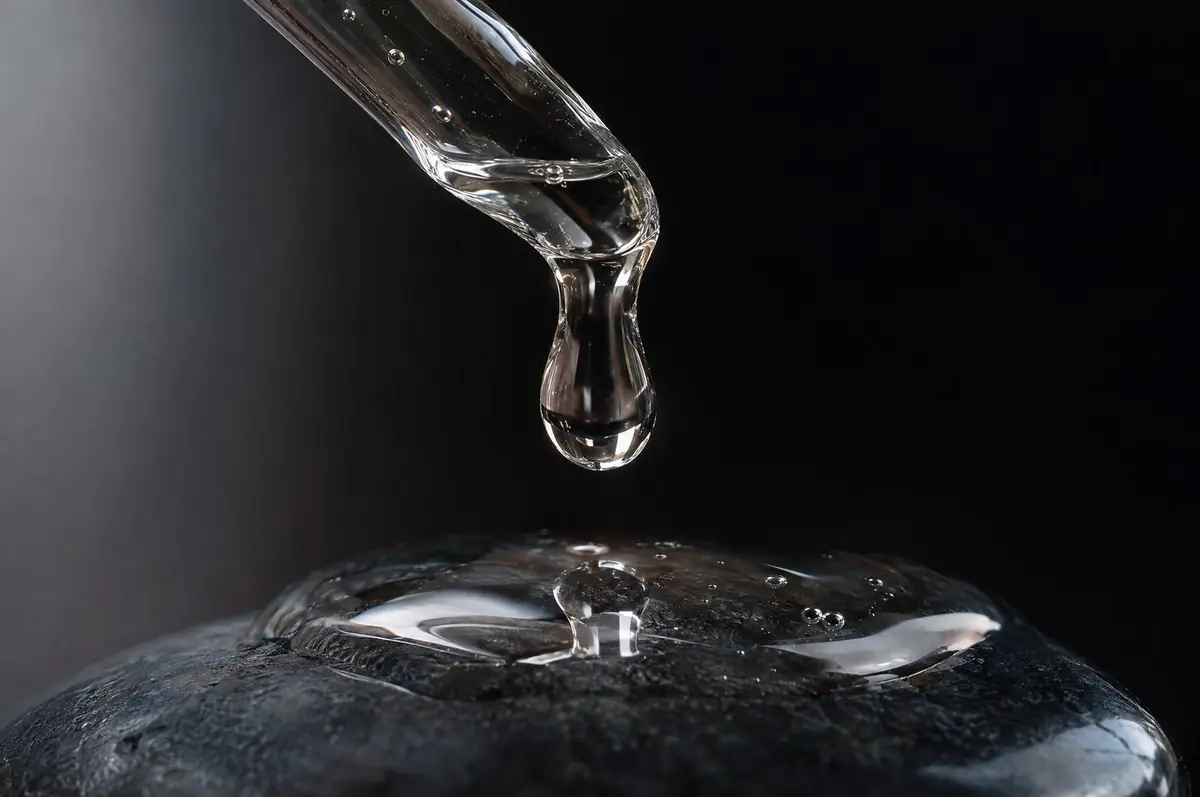

Quick answer: PDRN (polydeoxyribonucleotide) is a mixture of DNA fragments and one of the best-known ingredients in Korean skin science. In professional skincare it is a cosmetic ingredient applied to the skin. Topical research is early and still small, so the clearest way to present PDRN skincare is by how skin looks and feels: hydrated, comfortable and radiant.
This article is about topical cosmetic skincare only. Follow your college's standards, the product's instructions for use, and your medical director.
What is PDRN?
A 2017 review in Frontiers in Pharmacology by Squadrito and colleagues describes PDRN as "a mixture of deoxyribonucleotides with molecular weights ranging between 50 and 1,500 KDa" (kilodaltons), purified from fish sperm DNA. The same review notes that, in medicine, "PDRN is a proprietary and registered drug."
You may also see "PDRN" on botanical ingredients. A study in the International Journal of Molecular Sciences (published online December 2025), for example, describes a low-molecular-weight, peony-derived PDRN. The name is the same; the source is different. Ask your supplier which one you are buying.
Is PDRN skincare a cosmetic?
It can be. In Canada, the category depends on how a product is made, represented and used.
The Food and Drugs Act defines a cosmetic as a product "manufactured, sold or represented for use in cleansing, improving or altering the complexion, skin, hair or teeth." Health Canada's Guidance Document: Classification of Products at the Cosmetic-Drug Interface asks whether a product exerts "solely a superficial effect," and states: "In order to be a cosmetic, the product must exhibit a lack of percutaneous absorption." It adds that "Products for which therapeutic claims are made are evaluated as drugs."
So PDRN skincare is presented and evaluated as what it is: a topical product, described in cosmetic terms.
What does research on topical PDRN show?
Topical research is early. Here is what has been published.
A 2025 review. Park and colleagues reviewed 175 studies on PDRN and skin (Applied Sciences, 2025). For topical creams, the review lists 0.08% PDRN creams used for superficial wounds and skin nourishment, rather than cosmetic efficacy trials. Three of the seven authors were employed by a company.
A small study of a peony-derived PDRN cream. Bak and colleagues tested a cream with 1% low-molecular-weight peony PDRN against a control cream in 10 healthy adults over four weeks (International Journal of Molecular Sciences, 2026; published online December 2025). On the upper arm, after a standard irritant (sodium lauryl sulfate) was used to disrupt the skin barrier, water loss through the skin fell by 21.01% over two weeks with the test cream and 13.98% with the control cream. Skin elasticity around the eyes rose by about 4.25% at four weeks, which the authors describe as a slight improvement. All six authors worked for the company developing the ingredient, and the authors acknowledge the small sample and short duration.
Laboratory work. Cell studies, including the in vitro portion of the Bak study, explore how PDRN fractions behave in skin cells. Cell results are useful for research but do not show what a cream does on a client's face.
What this means for a clinic: describe PDRN skincare in terms of how skin looks and feels, such as hydration, comfort and a smoother-looking surface, and avoid suggesting results that topical studies have not shown.
How should a clinic talk about PDRN skincare?
| Keep it cosmetic | Avoid |
|---|---|
| "Skin feels hydrated and comfortable" | "Repairs" or "heals" skin |
| "A smoother, more radiant look" | "Stimulates collagen" or other biological claims |
| "Professional Korean skincare with PDRN" | Results from studies of other product types |
This table is Kleos editorial guidance based on the Food and Drugs Act definition and Health Canada's cosmetic-drug interface guidance.
What should I ask before I stock a PDRN product?
- Is the PDRN from fish DNA or from a botanical source?
- Has the product been notified to Health Canada as a cosmetic?
- Do the label and directions describe topical use only?
- Which studies support the claims, and were they done on the topical product?
- Does each unit carry a lot number and expiry date?
Questions clinics ask
Is PDRN the same as PN (polynucleotide)?
They are related DNA-fragment ingredients. Published studies often use them for different products, so check which one a study tested.
How should I describe PDRN skincare to patients?
In cosmetic terms: skin that looks and feels hydrated, comfortable and radiant. Keep claims to how skin looks and feels.
Is botanical PDRN the same as fish-derived PDRN?
They share a name, but the source differs. Research on one does not automatically apply to the other.
Can PDRN skincare be used after an in-clinic treatment?
Use cosmetic skincare as labelled and as your medical director advises. Make only cosmetic claims about it.
Sources
- Squadrito F, Bitto A, Irrera N, et al. Pharmacological Activity and Clinical Use of PDRN. Frontiers in Pharmacology. 2017;8:224. doi:10.3389/fphar.2017.00224 (Corrigendum: 2022;13:1073510.)
- Park S, Baek S, Shin HJ, et al. Polydeoxyribonucleotides as Emerging Therapeutics for Skin Diseases: Clinical Applications, Pharmacological Effects, Molecular Mechanisms, and Potential Modes of Action. Applied Sciences. 2025;15(19):10437. doi:10.3390/app151910437
- Bak SU, Jung MS, Kim DJ, et al. Anti-Aging Efficacy of Low-Molecular-Weight Polydeoxyribonucleotide Derived from Paeonia lactiflora. International Journal of Molecular Sciences. 2026;27(1):220 (published online December 24, 2025). doi:10.3390/ijms27010220
- Food and Drugs Act (R.S.C., 1985, c. F-27), s. 2. Current to 2026-10-29. laws-lois.justice.gc.ca
- Health Canada. Guidance Document: Classification of Products at the Cosmetic-Drug Interface. canada.ca
See it for your clinic
Advanced Korean skin science, delivered by a Canadian, doctor-led team. Clinic pricing and product details are available to approved clinics.
Open a clinic account. Most accounts are approved within one business day.